
 Several months ago, I visited an eye doctor because I was experiencing persistent pain in my left eye. He took a quick look, diagnosed it as a stye, prescribed medication, and sent me on my way. Something about the experience didn’t sit right with me. The doctor barely acknowledged me. He told me the problem wasn’t related to allergies, then instructed me to continue using allergy drops. I left confused, feeling as though I hadn’t really been heard or seen. Worse, my eye wasn’t getting better.
Four weeks later, still dealing with the discomfort, I decided to get a second opinion. I expected another eye exam. What I experienced was a powerful reminder of what makes people feel safe enough to trust someone else’s leadership.
The Doctor Who Actually Looked Me in the Eye
From the moment the second doctor entered the room, something felt different. He looked directly into my eyes, said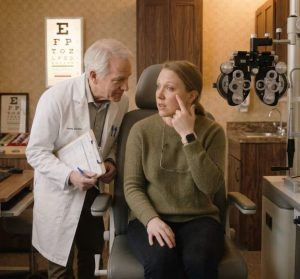 hello, and gently lifted my eyelid to examine it. I hadn’t even settled into my chair before he was paying attention to the very thing that had brought me there. “How long has it been here?” he asked. There was something reassuring about the way he carried himself. He wasn’t overly enthusiastic or trying to impress me. He was simply attentive, curious, and focused on understanding what was happening.
After weeks of discomfort and uncertainty, I could feel myself beginning to relax. As we talked, he explained that the irritation might be related to dry eyes, allergies, or a combination of the two. He helped me understand why using artificial tears before allergy drops could reduce irritation and make the treatment more comfortable. He wasn’t just telling me what to do. He was helping me understand why. And I noticed how much that mattered.
Confidence That Doesn’t Need to Be Loud
At one point, the doctor approached with a small instrument to gently remove a scab from my eyelid. Now, I don’t know about you, but having someone approach my eye with a sharp-looking instrument isn’t exactly my idea of a relaxing afternoon. Yet I wasn’t particularly nervous. I trusted him.
That realization caught my attention. We’d only just met, and he hadn’t done anything extraordinary. He’d examined my eye, listened to my concerns, explained what he was seeing, and told me what he intended to do. Still, something about his presence gave me confidence that I was in capable hands.
So I asked him a question. “Where does your confidence come from?” “I’ve been doing this a long time,” he said. I appreciated his answer, but I found myself thinking about all the people I’ve encountered who’ve been doing their jobs for decades and still don’t inspire that same sense of trust. Experience certainly matters. But experience alone doesn’t explain what I felt in that room.
This doctor seemed comfortable with what he knew, willing to explain what he was considering, and fully engaged with the person sitting in front of him. He didn’t need to convince me that he was competent. His attention, clarity, and calm approach allowed me to experience his competence for myself.
What Presence Makes Possible
As I drove home, I kept thinking about the difference between those two appointments. Both doctors had medical training. Both were qualified to examine my eye. Both offered treatment. Yet I walked away from the first appointment feeling confused and uncertain, and from the second feeling reassured and cared for. What made the difference?
I can’t know what was happening for the first doctor that day. Perhaps he was overwhelmed, distracted, or dealing with something I couldn’t see. I also can’t know everything that contributed to the second doctor’s approach. What I do know is how differently I experienced those two interactions.
The second doctor gave me his attention. He listened, explained his thinking, and helped me understand what was happening. In doing so, he made it easier for me to trust him. And that got me thinking about leadership.
When people come to us with questions, concerns, or problems they don’t know how to solve, they’re not simply looking for information. They’re also paying attention to how we respond.
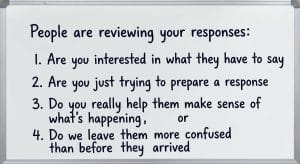
- Do we seem interested in understanding their experience?
- Are we listening to what they’re actually saying, or are we already preparing our response?
- Do we help them make sense of what’s happening, or do we leave them with more questions than they had when they arrived?
These moments shape the quality of our relationships, often in ways we don’t fully appreciate.
You Can’t Lead People You Don’t Really See
I’ve spent more than two decades working with leaders who genuinely want to do right by their people. Many are knowledgeable, hardworking, and deeply committed to their organizations. Yet it’s possible to be all those things and still miss the person sitting across from us.
We get busy. We become focused on solving problems, meeting deadlines, and getting through everything demanding our attention. Sometimes we’re so determined to provide the right answer that we forget to understand the question being asked. I wonder how often people leave conversations with us feeling the way I did after that first appointment.
Perhaps we gave them accurate information. Maybe we even solved the immediate problem. But did they feel heard? Did they understand our thinking? Did the interaction strengthen their confidence in us, or leave them feeling as though they were simply another item on our agenda?
There’s a difference between addressing someone’s problem and connecting with the person experiencing it. The second doctor reminded me of that distinction. He didn’t spend an extraordinary amount of time with me. He didn’t deliver an inspiring speech or make promises about how quickly my eye would heal. He simply gave me his attention, shared what he understood, and helped me feel included in the process. That was enough to change the entire experience. 
The Leadership Lesson I’m Taking With Me
I’ve been thinking about how easy it is to confuse leadership presence with confidence, charisma, or the ability to command a room. But the kind of presence I experienced in that doctor’s office was much quieter. It was reflected in his willingness to pay attention, his curiosity about what I was experiencing, and his ability to communicate without making me feel rushed or dismissed.
And perhaps that’s what I most want to remember. Being present doesn’t mean we have unlimited time, perfect answers, or the ability to solve every problem someone brings us. It means recognizing that the person in front of us matters, even when we’re busy, distracted, or uncertain about what to do next.
It also means noticing when our attention has drifted and choosing to bring it back. As leaders, we influence people through more than the decisions we make or the direction we provide. We influence them through the experience of interacting with us.
When someone approaches us with a concern, our response can make it easier or harder for them to speak honestly the next time. When someone is uncertain, the way we communicate can either deepen that uncertainty or help them feel more grounded. And when someone needs our guidance, our willingness to understand their experience can make all the difference in whether they trust what we have to offer.
None of this requires perfection. It does require attention. I left that second appointment with a better understanding of what might be happening with my eye. But I also left with something I hadn’t expected: a reminder of how meaningful it feels to be genuinely seen.
And now I’m wondering about the people who interact with me.
- When they walk away from our conversations, do they feel more understood or more confused?
- Do they feel comfortable bringing me their concerns, or do they hesitate because they’re unsure how I’ll respond?
Those are questions worth asking, particularly when life gets busy and our attention is pulled in a dozen different directions. Because sometimes the most meaningful thing we can offer another person isn’t an immediate solution or a perfectly crafted response. It’s the experience of knowing that, in this moment, they have our attention.
I’m curious: Can you remember a time when someone’s presence made you feel genuinely heard, understood, or cared for? What did they do that made the difference?
Here’s to your greatness,
Misti Burmeister
About Misti Burmeister
Misti Burmeister is an executive leadership coach, keynote speaker, and bestselling author who helps leaders communicate so people care and take ownership. Through Inspirion, she helps executives and teams navigate difficult conversations, strengthen trust, and recognize the internal reactions that undermine effective leadership. Her current body of work, Before the Reaction, explores how awareness in the moments before we respond creates greater clarity, choice, and connection.
Explore a speaking engagement or leadership conversation at MistiBurmeister.com or email [email protected].