
About five years ago, my wife Yvette and I were in the backcountry, not too far from a shelter. There wasn’t anyone else  around—just the two of us sitting near a small campfire in the dark. It was quiet in that way only the woods can be—still, heavy, and just mysterious enough to make every sound feel amplified.
And then we heard it. A loud, high-pitched screech cut through the night. It was sharp and unexpected, the kind of sound that makes your body react before your mind has time to catch up. I immediately looked at Yvette and said, “What the hell was that?”
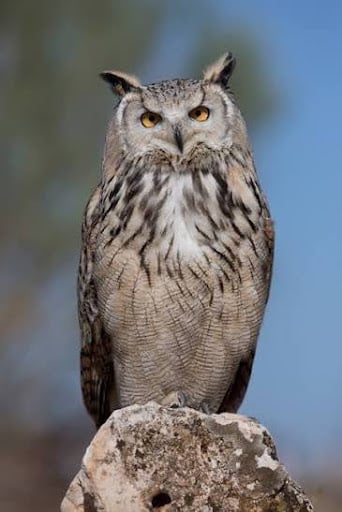
She paused for a moment, listening more closely. And then it happened again—louder this time, more intense, impossible to ignore. “What is that?” I asked again, this time with a little more urgency in my voice. “That’s a screech owl,” she said, completely matter-of-fact, as if there were no other reasonable explanation.
Now, Yvette often knows things that I don’t, so it sounded legitimate. She even had a story to back it up—something about camping with her dad and hearing that sound before. It was just enough context to make it feel true. It made sense in the moment, and that was enough for me. So I trusted her. And eventually, we went to bed.
The next morning, she looked at me and said, “I have no fucking idea what that was.” We both burst out laughing, the kind of laugh that comes from realizing how confidently wrong you can be. And I remember thinking—I’m actually really glad she didn’t tell me that in the pitch dark.
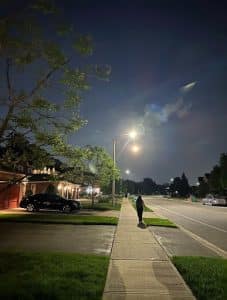
Fast forward to a couple nights ago. We hear a sound again, except this time it doesn’t sound like an owl. It sounds like a child screaming—loud, sharp, and deeply unsettling, in a way that immediately grabs your attention. Without saying much, we both step outside and start walking toward the end of our cul-de-sac to figure out what it is. Yvette is already moving faster than I am, clearly more committed to solving the mystery.
One of our neighbors comes out too, her dog pulling her along as if it had already decided something was worth investigating. “Did you hear that?” I ask. “Oh yeah,” she says. “The dog insisted we come outside.” Then she pauses for a moment and adds, “We used to hear that all the time when we lived in Northern Virginia. It’s just a fox.”
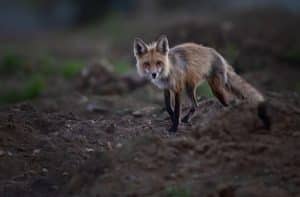 A fox? That didn’t match anything in my head. It didn’t align with the sound I had just heard, and yet she said it with enough certainty that it immediately became a possibility. Curious now, I pick up my pace to catch up with Yvette, who is already a few steps ahead. She’s gotten close enough to take a picture, and when I reach her, I see it. A fox. Making that sound. We look at each other and immediately start laughing. “I think that was our screech owl,” one of us says, and we both laugh even harder.
There’s something about moments like that—how quickly we move to label what we’re experiencing, especially when we don’t fully understand it. There’s a kind of comfort in naming something, in creating an explanation that helps us make sense of what feels unfamiliar or uncertain.
And what’s interesting is how confident we can sound in those moments, even when we’re guessing. The story feels real, and because it feels real, we treat it as if it’s true. Once we’ve labeled something, we tend to stop questioning it. We move on, assuming we’ve figured it out.
But this doesn’t just happen in the woods. It happens in meetings, in conversations, and in leadership more often than we realize. We hear something, we feel something, and almost immediately, we decide what it means. That meaning shapes how we respond, how we interpret the situation, and how we move forward.
Most of the time, we don’t even realize we’re doing it. The story feels logical. It often comes with just enough evidence—or confidence—to go unquestioned. But confidence and accuracy are not the same thing.
 What I’ve been paying more attention to lately isn’t just what I think or how I respond—it’s what happens right before that. It’s the moment something registers, the moment a story begins to form, the moment I’m about to decide what something means. Because that’s where the real leverage is. Not in having the right answer, but in being willing to question the one you’ve already created.
So here’s something to sit with: Where in your life—or your leadership—might you be reacting to a “screech owl,” when what’s actually there is something else entirely?
Here’s to your greatness,
Misti Burmeister
About Misti Burmeister
Misti Burmeister is an executive leadership coach, keynote speaker, and bestselling author who helps leaders communicate so people care and take ownership. Through Inspirion, she helps executives and teams navigate difficult conversations, strengthen trust, and recognize the internal reactions that undermine effective leadership. Her current body of work, Before the Reaction, explores how awareness in the moments before we respond creates greater clarity, choice, and connection.
Explore a speaking engagement or leadership conversation at MistiBurmeister.com or email [email protected].