
What I Noticed Over Lunch

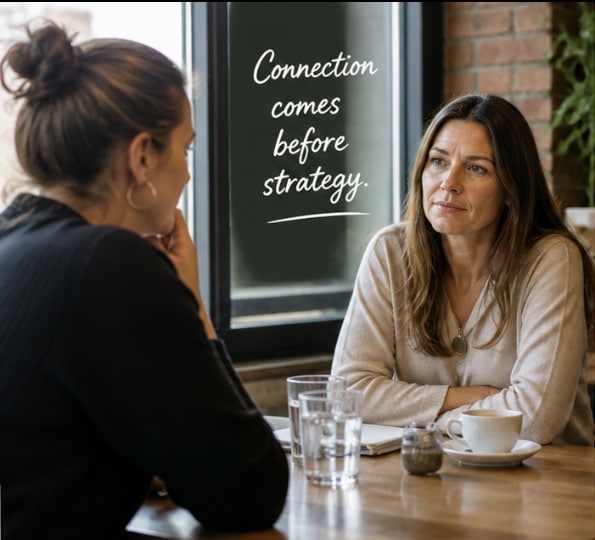
Yesterday, I sat down for lunch with a woman named Katrina—and it became a reflection on something I see often in leadership: what happens when there’s nothing to fix, but we still feel the urge to intervene.
She owns a small construction company—one her mother started. It’s a boutique business, just a handful of employees. She recently bought it from her mom along with her cousin.
As we talked, she shared that she’s struggling to build a pipeline of new customers.
“All of my clients are in their 70s,” she said.
Because I know people are drawn to those who care deeply about their work, I asked what felt like a natural question:
“What do you love most about what you do?”
She paused.
Looked at me.
And said:
“I work to live. I don’t live to work. I have a homestead. I find meaning at home.”
I didn’t push.
But I noticed something.
There was a guardedness in her posture. In the way she spoke. In what she was willing—and not willing—to explore.
She kept bringing the conversation back to her mom.
To the business as something inherited.
Something maintained.
Not something alive.
And I could feel the tension inside of me.
I wanted to say:
If you needed a lung transplant, would you choose the doctor who’s just trying to make a living… or the one who is deeply passionate, constantly learning, and committed to the best possible outcomes?
But I didn’t.
She didn’t ask for coaching.
And I’m learning not to give what isn’t invited.
When There’s Nothing to Fix—But We Still Want Results
I left the conversation thinking about something I see often—in leadership, in business, and in life:
People want results from things they’re not connected to.
They want:
- more clients
- more engagement
- more growth
But they’re not connected to the work itself.
Not curious about it.
Not energized by it.
Not alive in it.
And people can feel that.
Because whether we realize it or not, we’re always asking:
Does this person care?
Not performatively.
Not professionally.
But genuinely.
The Part I Don’t Always Say Out Loud
What made the conversation even more interesting is how difficult it was for me to explain my own relationship to work.
Because for me… it’s blurry.
When I’m sitting with someone and we’re really talking—that doesn’t feel like work.
When I’m noticing patterns, asking questions, staying with what’s real in the moment…
That feels like joy.
It feels like aliveness.
It even feels like magic.
But writing proposals?
Bookkeeping?
Following up on logistics?
That feels like work.
And I don’t spend much time there.
So when she looked at me and assumed I must “work all the time,” I realized how hard it is to explain a life where:
What looks like work from the outside often feels like aliveness on the inside.
What I’m Learning to Do Instead
There was a time when I would have pushed harder in that conversation.

I would have tried to help her see something she wasn’t yet ready to see.
Now, I’m learning something different:
Not everyone is available for the same conversation.
And that’s okay.
I still believe people want to feel alive.
I still believe that when we are connected to what matters, something shifts—in how we show up, in how we lead, in what we create.
But I’m also learning this:
Aliveness can’t be forced.
And awareness can’t be given where it isn’t invited.
What This Means for Leadership
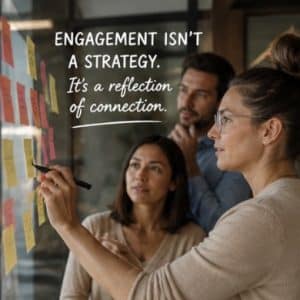
In leadership, this shows up all the time.
Leaders want:
- more engagement
- more ownership
- more creativity
But they’re not always connected to the work, the people, or even themselves.
And just like in that conversation over lunch…
People can feel it.
A Question I’m Sitting With
I left that lunch not with answers, but with a question:
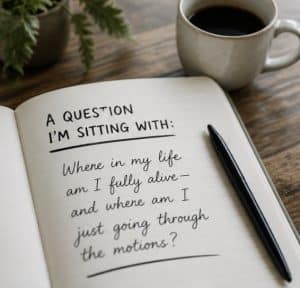
Where in my life am I fully alive—and where am I just going through the motions?
Because the truth is:
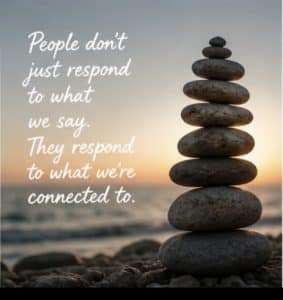
People don’t just respond to what we say.
They respond to what we’re connected to.
If this resonates, you may also enjoy my work on affective awareness—how noticing earlier signals can change how we lead, connect, and make decisions under pressure.
Here’s to your greatness,
Misti Burmeister